Free 30 Minute consultation with Yvonne
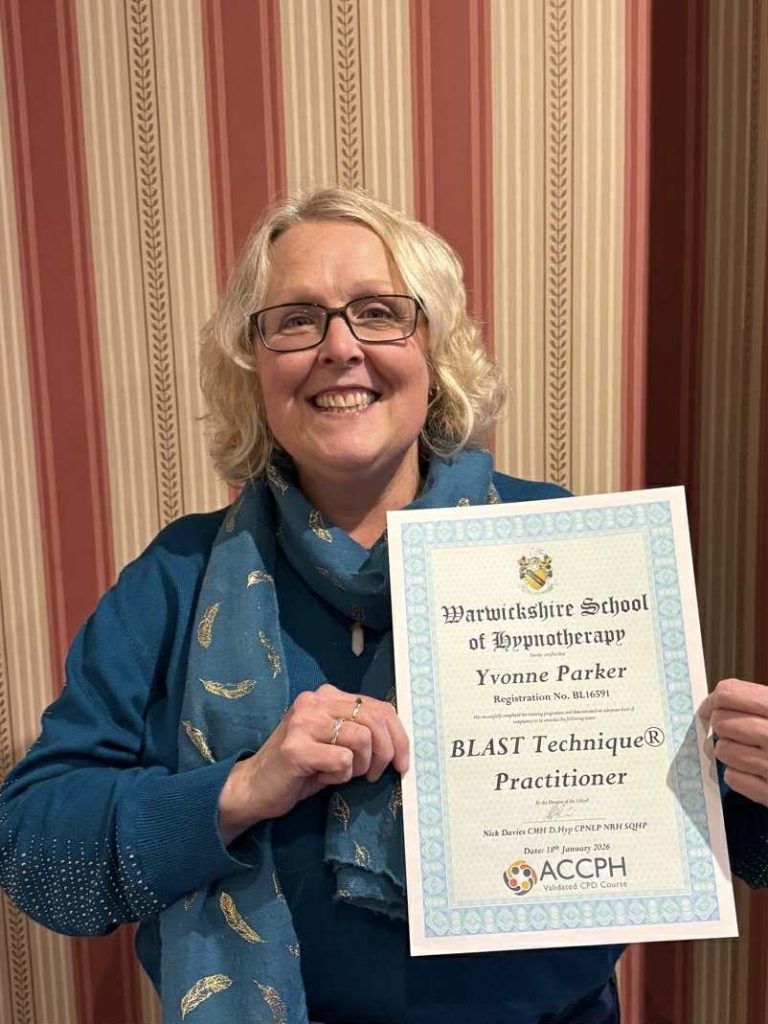
What is the BLAST Technique®?
If you’ve ever found yourself thinking, “I know it’s in the past, so why does it still feel so present?”, you’re not alone.
Many emotional struggles are not just thoughts; they’re patterns held in the nervous system. Sometimes those patterns are linked to experiences that were overwhelming, frightening, or simply too much to process at the time.
The BLAST Technique® is described by the BLAST Technique® Association as a neuroscience-informed approach developed by Nick Davies in 2008. It is designed to support trauma and stress-related processing by working with the brain’s natural systems, using bilateral stimulation as part of that process.
The intention, as presented by the Association, is to create a more compassionate and client-centred experience, reducing the need for painful re experiencing while still supporting meaningful change.Why bilateral stimulation is mentioned so often
Bilateral stimulation is commonly associated with EMDR. The BLAST Technique® Association frames BLAST® as an evolution of this space, integrating bilateral stimulation alongside other therapeutic components to support processing and memory reconsolidation.
While everyone’s experience is different, the broad aim is to help the brain “update” the way a memory is stored, so that what happened in the past does not continue to trigger the same intensity of emotional or physical reaction in the present.What does the BLAST Technique® Practitioner® training involve?
When a practitioner trains in any trauma-informed method, the training matters. Not because it’s about collecting certificates, but because trauma work requires:
- strong foundations (how the stress response works)
- clear preparation (so clients feel safe and in control)
- ethical pacing and consent
- strong skills in listening and feedback
- practitioner self-care (because co-regulation is real)
The BLAST Technique® Practitioner® training outlines a structured curriculum that includes, among other topics:
- theory related to trauma and stress responses
- the roles of the amygdala, hippocampus and thalamus
- how stress affects the body (including General Adaptation Syndrome)
- preparation principles when treating trauma
- “clean listening” and feedback
- BLAST® pass variations and specific protocols (including “Regression to Cause” and “Inner Child” protocol)
- practitioner self-care protocols
The practitioner training is also described as CPD and accredited by the ACCPH.
What kinds of issues might this support?
The BLAST Technique® Association lists a wide range of areas where BLAST® has been used, including PTSD and complex trauma, as well as areas such as anxiety, phobias, grief, shame, insomnia and relationship breakups.
It’s important to say this with care: listing conditions is not the same as guaranteeing results. Every person’s history, nervous system, and readiness are different. Ethical therapy always begins with the question: What feels safe and appropriate for you?
How this training may help clients in the future
When a practitioner expands their toolkit responsibly, clients often benefit in a few key ways.
1) A more regulated, client-friendly process
The BLAST Technique® Association emphasises a compassionate approach that aims to minimise distress while processing.
For clients, this can matter deeply, especially if you’ve previously felt overwhelmed by therapy that moved too fast or felt too intense.
2) Clear structure and preparation
Good trauma work is not “go back and relive it”.
It’s preparation, pacing, consent, and building internal safety first. The BLAST training content explicitly includes preparation and reminders for safe use.
3) A wider range of options for different needs
Some people want to talk everything through. Some people do not. Many people need a blend: understanding + nervous system regulation + a structured process.
Having additional training can allow a practitioner to tailor sessions more carefully, choosing the approach that best fits your preferences, your pace, and your capacity on that day.
4) Integration with existing hypnotherapy support
For clients who already benefit from hypnotherapy for calm, sleep, confidence, emotional regulation, or habit change, BLAST Technique® training may offer an additional structured method that can sit alongside that work where appropriate.
The key word is appropriate: not everyone needs the same approach, and a good practitioner will always focus on safety, readiness, and personal choice.
How to know if you’re ready for this kind of work
Trauma-informed support is not about forcing anything. A good starting point is noticing:
- Do you feel resourced enough to explore difficult material gently?
- Do you have coping tools for after a session?
- Do you feel able to pause or stop if needed?
- Would you prefer a structured method rather than open-ended talking?
These are the kinds of questions we can explore together before deciding on any approach.
A note on legitimacy and safe practice
The BLAST Technique® Association states training is only delivered by specific approved trainers, and that each practitioner has a unique registration number that can be verified.
This kind of governance matters because clients deserve clarity, transparency, and properly trained support.
If you’d like future updates If you’d like to know when this will be available within my practice, or you’d like to discuss what support might be most suitable for you, you’re warmly welcome to get in touch via the website or email yvonne@yphypnotherapy.com

yvonne